Battery Systems Arizona
Your battery string is the one component you can't test under load until the real event. Impedance trending, capacity discharge testing, and replacement on the right cycle — before the next outage reveals a string that couldn't deliver. We service stationary batteries for UPS systems, DC power plants, and critical power applications across Arizona. ROC #348619. 24/7 statewide.

The Battery That Looks Fine Until It Doesn't
Float voltage reads normal. The UPS reports 100% charge. Nobody has touched the battery strings in three years — but the PM checkbox says "passed." Then utility fails, the UPS transfers to battery, and six minutes later the load crashes. Runtime that was supposed to be 15 minutes delivered four.
Float voltage and even impedance readings are trend indicators, not runtime guarantees. The only way to know actual battery capacity is to discharge it under load and measure. Facilities in Arizona face an accelerated version of this problem: desert heat degrades VRLA batteries faster than any maintenance calendar built for standard climates accounts for.
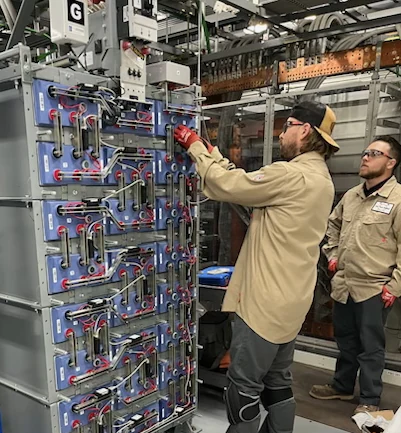
We replace, test, and maintain stationary batteries for UPS systems and DC power plants across Phoenix, Scottsdale, Tucson, and all of Arizona. 24/7 emergency response.
Battery Services We Provide
Every service call starts with understanding your system — UPS make and model, battery chemistry, string configuration, runtime requirement, and the thermal environment the strings actually operate in.
UPS Battery Replacement
End-to-end battery replacement for Eaton, Vertiv/Liebert, APC, Schneider Electric, and most other UPS platforms. We coordinate the swap to maintain uptime through maintenance bypass where possible, torque all connections to spec, and verify runtime after installation.
DC Power Plant Battery Strings
EnerSys, C&D Technologies, Saft, GNB/Exide, and Hawker battery string installation and replacement for -48V DC power plants. Telcordia-compliant installation documentation, inter-cell connector inspection, and post-installation capacity verification.
Battery Capacity Testing
Actual discharge testing to IEEE 450 and IEEE 1188 standards — not just float voltage or impedance readings. We connect a calibrated load and measure real runtime under real demand. Written capacity report after every test. Required for NFPA 99 and NFPA 110 compliance records.
Impedance Testing & Trending
Individual cell impedance measurement and trending to detect degradation before capacity testing is required. Impedance data over multiple visits establishes a baseline and flags cells trending toward failure. More frequent than capacity testing — an effective early-warning tool between full discharge tests.
Battery Removal & Disposal
Safe removal and compliant disposal of replaced lead-acid strings. Lead-acid cells are regulated hazardous material — disposal requires proper handling and documentation. We manage the full removal and recycling process, including manifests, so your facility stays in compliance.
24/7 Emergency Battery Service
UPS on bypass with a dead battery? DC plant battery string alarming? Call 480-262-6505 any hour. Emergency battery service in Phoenix, Scottsdale, Tucson, and statewide Arizona.
Battery Chemistries & Brands We Work With
VRLA (AGM & gel cell): The most common stationary battery chemistry — maintenance-free, sealed, suitable for UPS and DC power applications. We install and replace VRLA cells from EnerSys, C&D Technologies, Saft, GNB/Exide, Hawker, and Deka.
Wet cell (flooded lead acid): Used in large-scale telecom and utility applications requiring longer design life and higher energy density. Requires ventilation and periodic watering — we assess site suitability before specifying.
Lithium-ion: Growing adoption in UPS applications for reduced footprint, faster recharge, and longer design life. We work with lithium-ion battery modules for compatible Eaton, Vertiv, and Schneider Electric UPS platforms.
What Arizona Heat Does to Stationary Batteries
Battery aging follows the Arrhenius equation: every 10°C rise in operating temperature roughly halves battery service life. VRLA cells are rated at 25°C. In an Arizona server room running hot, a network closet with no dedicated cooling, or an outdoor telecom cabinet in the summer sun, internal temperatures regularly exceed 35–45°C.
The result is accelerated capacity fade that's invisible on routine checks. A string that delivered 12 minutes when new may deliver 6–7 minutes after two Arizona summers — while still reading 100% on float voltage. Without a capacity test, that runtime gap is invisible until it fails in service.
We build replacement and testing schedules around actual thermal conditions. For Arizona facilities, that often means capacity testing every 12–18 months rather than the standard 2–3 year interval — and specifying batteries with temperature compensation built into the charger setpoints.
How We Approach Battery Replacement Projects
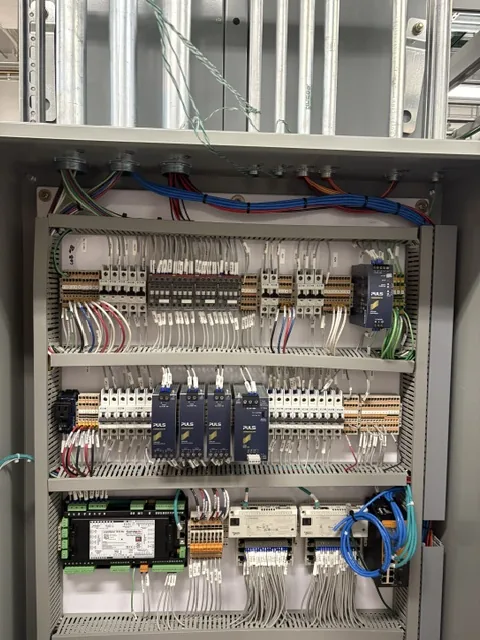
Before we specify replacement strings, we assess the thermal environment — room temperature, airflow, proximity to heat sources — and the actual load profile, not just the nameplate rating. A replacement string sized to the same specs as the original may underperform if the operating environment has changed, the load has grown, or the original was already undersized for Arizona conditions.
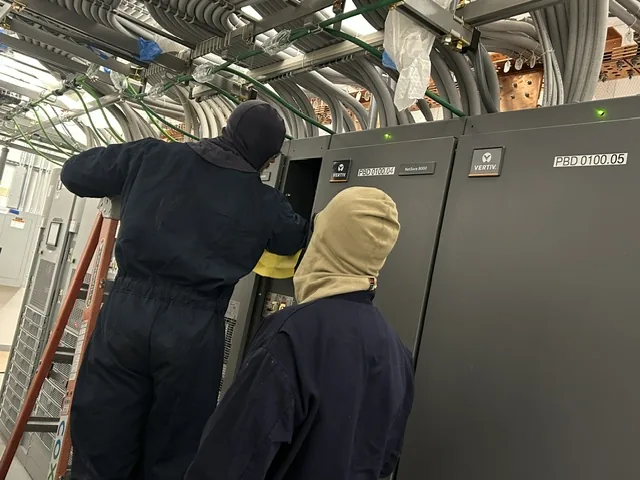
For UPS systems, we coordinate the replacement to maintain protection through maintenance bypass where the system supports it. For DC power plant strings, we follow Telcordia GR-487-CORE procedures — torque documentation, inter-cell connector inspection, and post-installation capacity verification. Every project gets a written report covering the as-found condition, what was replaced, and the post-installation test results.
New Phase Electrical holds ROC License #348619 and Telcordia Level 4 certification for DC power plant battery work. WOSB certified for government procurement requirements. Verifiable at roc.az.gov.
Frequently Asked Questions
How long do UPS batteries last?
Most VRLA cells used in UPS systems have a manufacturer design life of 3–5 years for standard cells or 10–12 years for extended-life cells. In Arizona's heat, actual service life is shorter — internal temperature is the primary aging factor, and every 10°C rise above 25°C roughly halves service life. A UPS unit in a well-cooled data center may approach design life; one in a hot telecom room or poorly cooled electrical closet may need replacement in 2–3 years. We recommend annual impedance testing and replacement when capacity drops below 80% of rated capacity — regardless of calendar age.
How much does UPS battery replacement cost?
UPS battery replacement cost depends on the UPS make and model, battery chemistry (VRLA vs. extended-life vs. lithium-ion), the number of strings, and whether runtime verification is included. Small UPS battery replacements (single module, 2–20kVA systems) are straightforward service calls. Large three-phase UPS systems with multiple parallel battery strings are multi-day projects requiring careful coordination to maintain uptime during the swap. We provide quotes based on your specific UPS configuration — not generic pricing by unit size. Call 480-262-6505 or email Nikki@NewPhaseElectrical.com with your UPS model and string count.
Is it worth replacing batteries in an older UPS?
It depends on the UPS age, condition, and parts availability. If the UPS electronics are in good condition and compatible batteries are still manufactured, replacing the strings is almost always more cost-effective than replacing the entire unit — especially for three-phase systems where the UPS itself may have years of useful life remaining. We do a condition assessment before recommending battery replacement versus UPS replacement. A UPS with corroded bus bars, failed capacitors, or obsolete control boards may not justify the investment.
What is battery capacity testing and why does it matter?
Capacity testing discharges the cells under a controlled load to measure actual runtime — not an estimate based on float voltage or impedance. Float voltage tells you the battery is charged; impedance gives a trend indicator; neither tells you how long the battery will run the load when utility fails. A battery can pass impedance and deliver 60% of rated runtime under real conditions — especially in Arizona where thermal degradation accelerates. IEEE 450 and IEEE 1188 define capacity test procedures. We recommend capacity testing every 12–24 months for critical facility batteries in Arizona.
How does Arizona heat affect stationary battery life?
Battery aging follows the Arrhenius equation — every 10°C rise in operating temperature roughly halves service life. VRLA cells are rated at 25°C. Arizona facilities regularly expose the strings to ambient temperatures of 35–45°C or higher in non-climate-controlled rooms, pushing internal temperatures even higher under float charge. A string sized for 15 minutes of runtime at 25°C may deliver 8–10 minutes in Arizona summer conditions without proper climate control. We account for actual thermal conditions when sizing replacements and when recommending testing intervals.
Can you replace UPS batteries without taking the load offline?
In most cases, yes — with proper planning. UPS systems with maintenance bypass capability allow us to transfer the load to bypass, replace the strings, and return the UPS to normal operation without a power interruption. For systems without bypass, we coordinate replacement during planned maintenance windows. For parallel-redundant configurations (N+1 or 2N), we can often replace one unit's batteries while the parallel UPS holds the load. We plan battery replacement projects around your facility's uptime requirements, not just our schedule.
What battery brands do you install and replace?
For UPS systems: Eaton, Vertiv/Liebert, APC, and Schneider Electric battery modules and strings — plus compatible third-party replacement cells for most major UPS platforms. For DC power plants: EnerSys, C&D Technologies, Saft, GNB/Exide, Hawker, and Deka strings. We work with VRLA (AGM and gel cell), wet cell (flooded lead acid), and lithium-ion batteries across all critical power applications. If we haven't worked on your specific battery configuration before, we'll tell you — but in 20+ years of combined experience across Arizona critical power, we've seen most of it.
Related Services
UPS Systems & Bypass
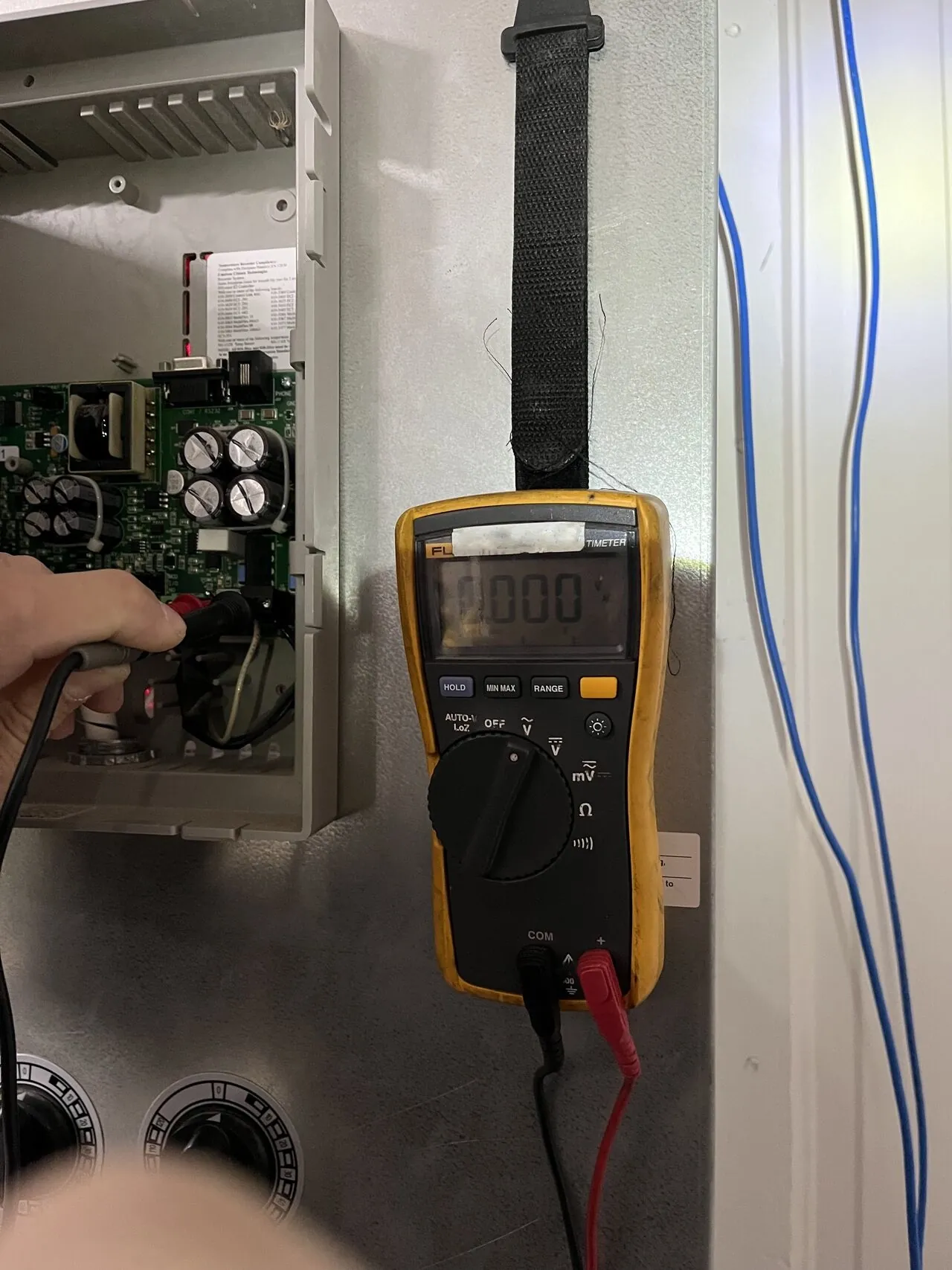
UPS installation, replacement, and maintenance bypass for Arizona data centers and mission-critical facilities.
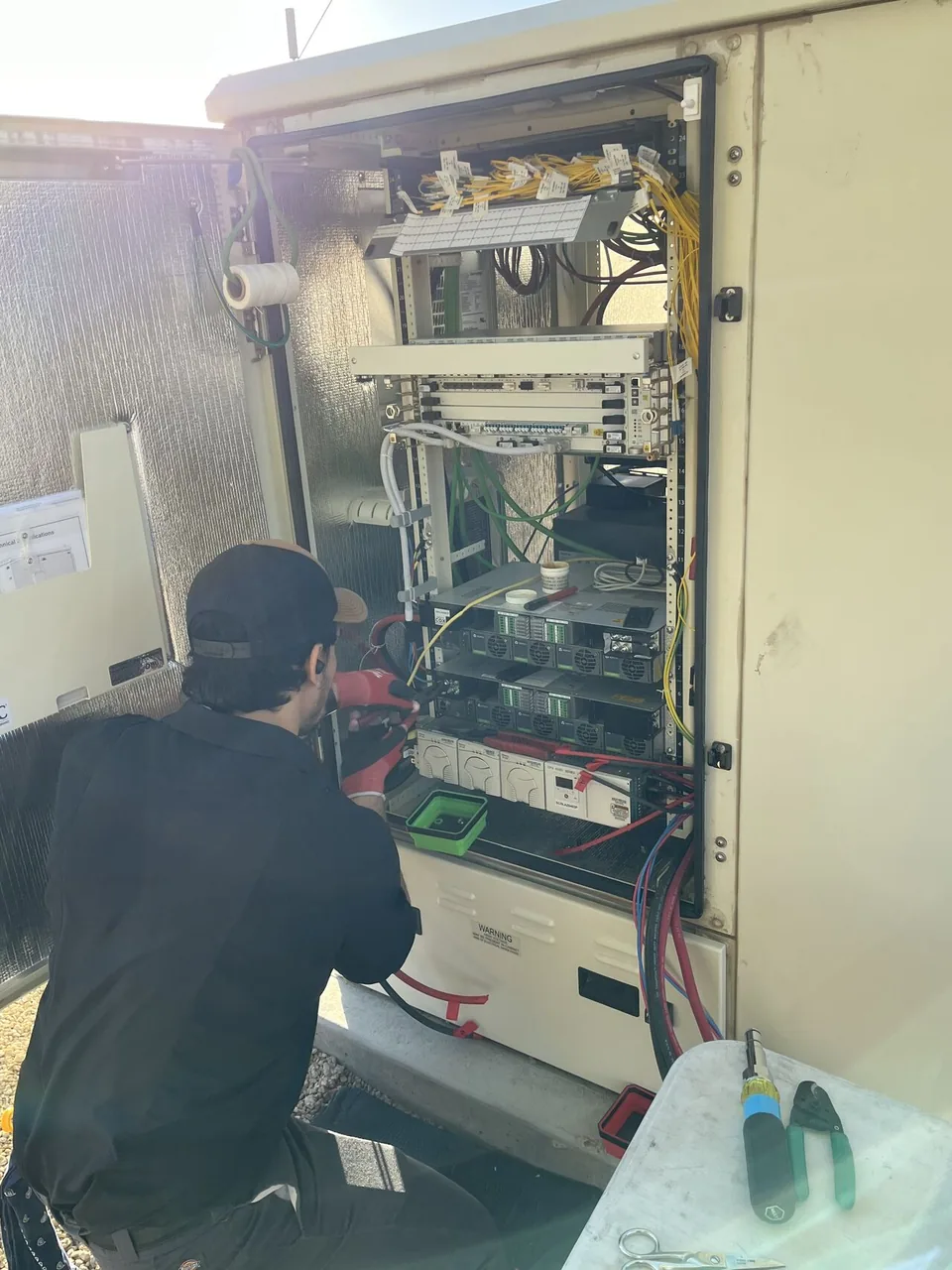
DC Power Plants
Telcordia Level 4 certified DC power plant installation, rectifier service, and BDFB work for Arizona telecom and colocation.
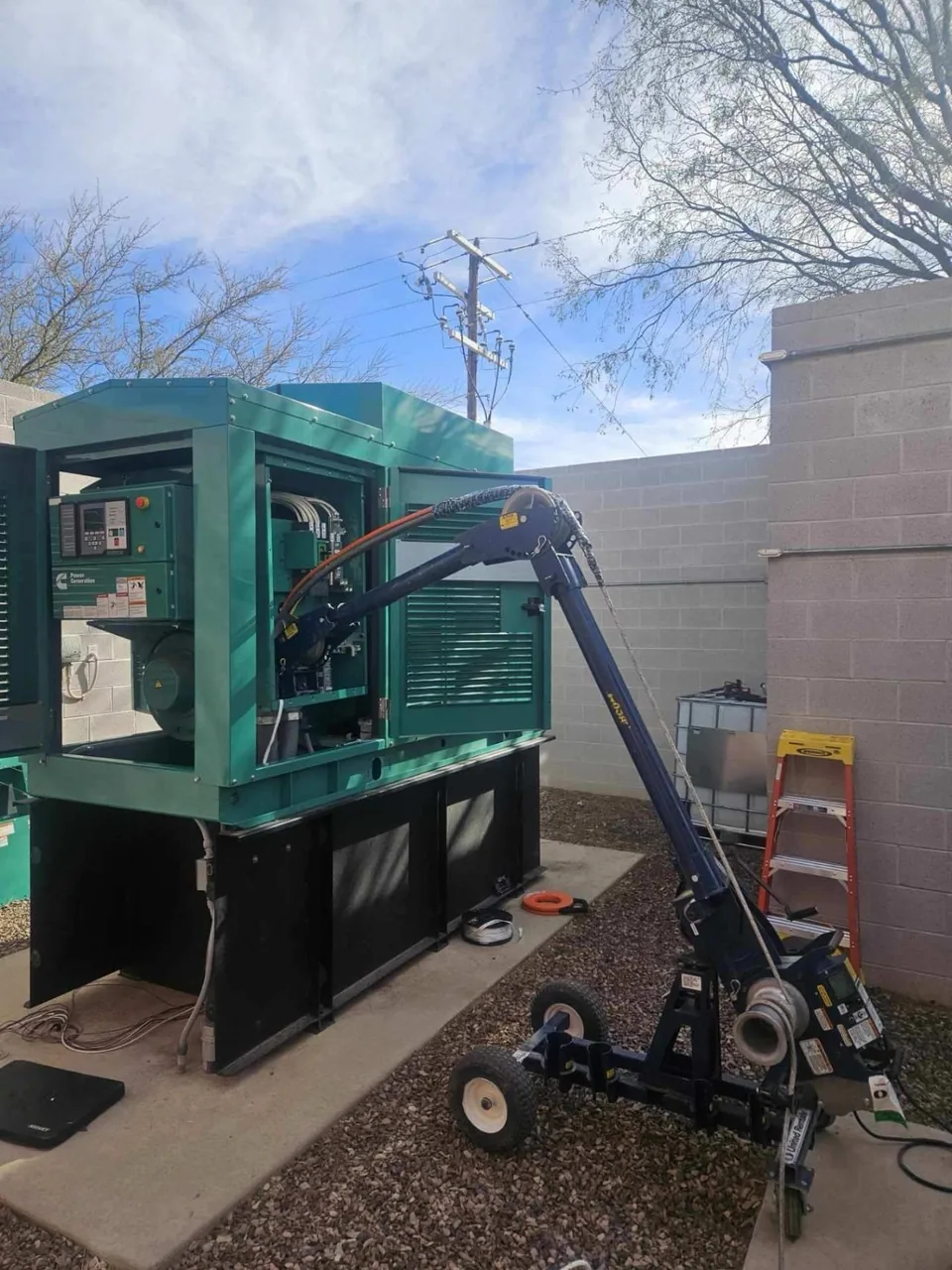
Generator Installation
Commercial standby generator installation, ATS integration, and load bank testing for Arizona critical facilities.
Know Your Actual Runtime Before the Next Outage
Battery assessment, capacity testing, replacement, or emergency service — anywhere in Arizona
24/7 Emergency Service
Round-the-clock response for battery and critical power emergencies
Email Us
Battery assessments, capacity testing, replacement quotes, and PM contracts
Arizona Location
519 W. Lone Cactus Dr. Ste 103
Phoenix, AZ 85027
Serving all of Arizona