DC Power Plants Arizona
Carrier-grade DC power isn't general electrical work — and your NOC knows the difference. Our team brings 20+ years designing, installing, and maintaining -48V DC power plants for Arizona's telecom providers and data center operators. Telcordia Level 4 certified. 24/7 statewide.

When a DC Power Plant Fails, the Network Goes Dark
Cell towers, carrier switch rooms, and colocation racks run on -48V DC power plants. When a rectifier module fails and there are no hot spares, the battery strings carry the load — for however long they last. A DC plant running on degraded batteries in an Arizona summer has far less runtime margin than the nameplate suggests.
Most DC power plant failures aren't sudden events. They're battery strings that haven't been capacity tested in three years, rectifier modules that went offline and nobody noticed, and BDFB fuse alarms that were acknowledged and never resolved. By the time the network goes dark, the failure was already weeks in the making.
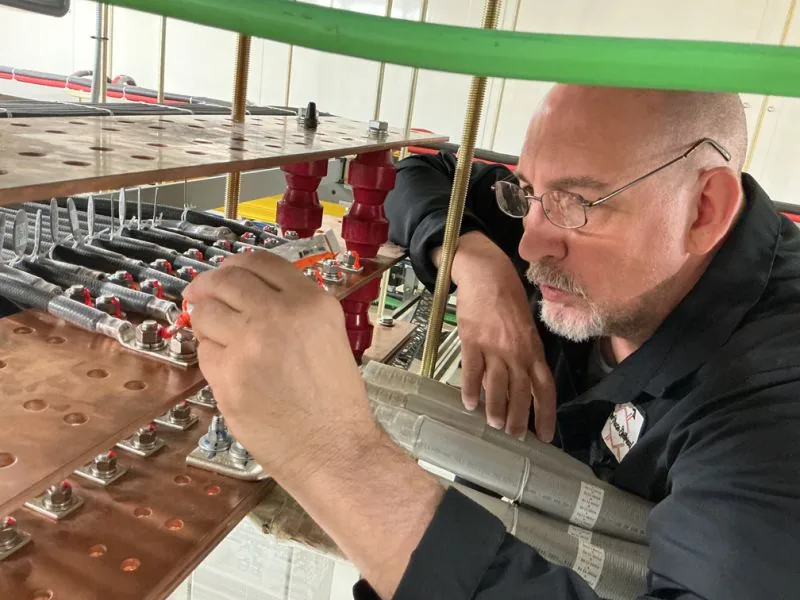
We install, commission, and maintain DC power plants for Arizona telecom carriers, colocation operators, cell tower networks, and critical infrastructure. Telcordia Level 4 certified. 24/7 emergency response statewide.
DC Power Plant Services We Provide
Every DC power plant engagement starts with understanding your load profile, battery runtime targets, redundancy requirements, and compliance obligations — not with a parts catalog.
DC Power Plant Installation
Complete -48V and 24V DC plant design, installation, and commissioning. Bay layout, rectifier rack installation, bus bar terminations, BDFB wiring, alarm system integration, and full system load test. Telcordia GR-487-CORE compliant documentation.
Battery String Installation & Replacement
EnerSys, C&D Technologies, Saft, and GNB/Exide battery string installation, capacity testing, and replacement. Proper torque documentation, inter-cell connector inspection, and disposal of removed cells. Sized for actual Arizona operating temperatures — not 25°C spec sheet values.
Rectifier Module Service
Hot-swap and replacement of failed rectifier modules for Vertiv (Emerson NetSure), Alpha Technologies, Eltek, and Benning systems. Module efficiency testing, controller firmware updates, and load-sharing verification across the rectifier shelf.
BDFB Installation & Maintenance
Battery Distribution Fuse Bay installation, fuse and breaker replacement, bus bar connection torque checks, and load balancing across battery strings. Circuit labeling and documentation to Telcordia standards for safe future maintenance access.
Preventive Maintenance Programs
Scheduled PM visits covering battery impedance testing, rectifier efficiency checks, float voltage logging, alarm verification, and bus bar inspection. Written reports after every visit. Documentation to Telcordia GR-29-CORE for carrier compliance records.
24/7 Emergency Response
DC plant alarm? Rectifier module failed? Battery string offline? Call 480-262-6505 any hour. DC power emergency service in Phoenix, Scottsdale, Tucson, and statewide Arizona.
DC Power Equipment We Install & Service
Rectifier systems: Vertiv (Emerson NetSure) · Alpha Technologies · Eltek · Benning · CommScope · Belden
Battery manufacturers: EnerSys · C&D Technologies · Saft · GNB/Exide · Hawker · Deka
And legacy DC plant systems still operating at Arizona telecom and carrier facilities.
What Arizona Does to DC Power Plants
Battery capacity derates with temperature — approximately 1% per degree Celsius above 25°C for VRLA cells. An Arizona facility where ambient temperatures push battery internal temperatures above 35°C in summer may be operating with 75–80% of rated runtime margin without knowing it. The float voltage reads normal. The impedance test passes. But under a real load on a 115°F day, the runtime isn't what the nameplate says.
We size battery strings for actual Arizona operating temperatures and build PM schedules around the desert climate: temperature logging at every visit, impedance testing before summer and after monsoon season, and capacity testing driven by thermal stress — not a generic annual calendar.
We hold Telcordia Level 4 certification — the highest level for DC power plant contractors — which is what leading telecom carriers and colocation operators require for infrastructure work on their networks.
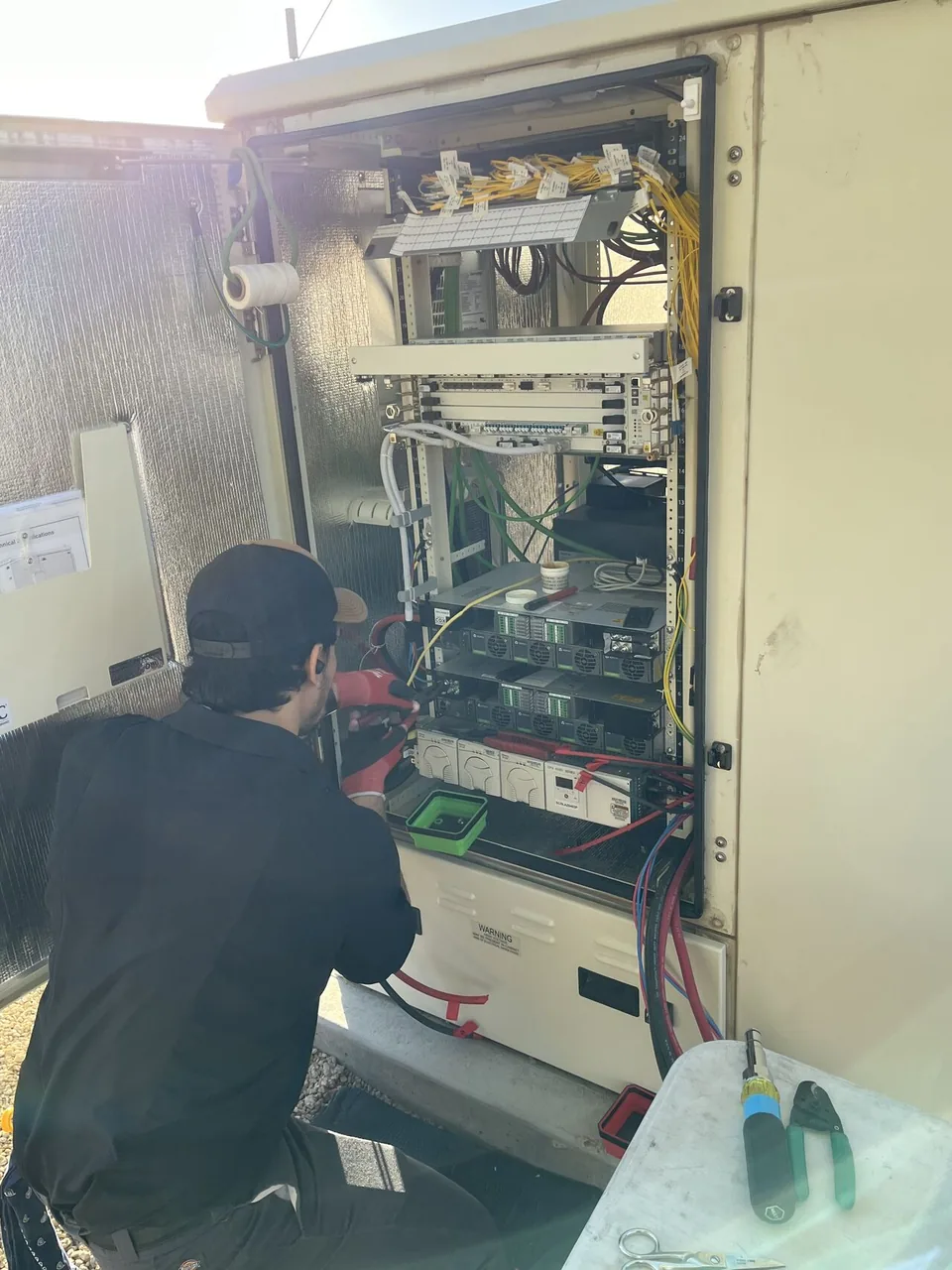
How We Approach DC Power Plant Projects
Every DC power plant installation starts with a load analysis: current draw by circuit, projected growth, target battery runtime, and the redundancy model — typically N+1 rectifiers and enough battery capacity for the required bridging time at actual operating temperature. We don't size to a spec sheet; we size to your facility's real thermal and load conditions.
We've installed and maintained carrier-grade DC power plants for leading telecom providers and infrastructure sites across Arizona — cell towers, carrier switch rooms, and colocation facilities in the Phoenix metro and statewide. The documentation discipline, torque verification, and commissioning records we produce aren't just paperwork; they're what your next technician needs to work safely on the system.
New Phase Electrical holds ROC License #348619 and Telcordia Level 4 certification, verifiable at roc.az.gov. WOSB certified for government procurement requirements.
Frequently Asked Questions
What is a DC power plant?
A DC power plant is a centralized system that converts AC utility power to regulated DC power — typically -48V for telecom and carrier applications. It consists of rectifier modules, battery strings, a distribution panel (BDFB), and a controller. The rectifiers charge the batteries and supply load simultaneously. When utility fails, the batteries carry the load without any transfer switching — no interruption, no sub-cycle gap. DC power plants are the backbone of cell towers, carrier switch rooms, colocation facilities, and any infrastructure that cannot tolerate even a momentary outage.
Why do telecom facilities use -48V DC instead of AC?
Telecom standardized on -48V DC (negative ground) for several reasons: DC has no frequency-related interference with sensitive telecom circuits, negative grounding reduces galvanic corrosion on copper infrastructure, and -48V is considered a safety extra-low voltage at standard operating levels. More importantly, DC systems provide truly uninterruptible power — the batteries are always in the circuit, so there's no transfer switch event, no sub-cycle interruption. Carrier-grade equipment is designed and rated for -48V DC input, and that standard has proven durable across decades of network evolution.
What is Telcordia Level 4 certification for DC power?
Telcordia (formerly Bellcore) GR-487-CORE defines installation and workmanship standards for DC power plant equipment. Level 4 is the highest certification level — covering rectifier installation, battery connections, bus bar terminations, BDFB installation, and system commissioning. Carriers and colocation operators routinely require Telcordia Level 4 certified contractors for DC power work on their infrastructure because it verifies the technician has demonstrated competency to carrier-grade standards. New Phase Electrical holds Telcordia Level 4 certification.
How often should DC power plant batteries be tested in Arizona?
IEEE 1188 recommends annual capacity testing and quarterly float voltage and visual inspection for VRLA batteries. For Arizona facilities, we recommend more frequent impedance testing and temperature monitoring — battery capacity derates significantly above 25°C, and Arizona summer conditions regularly push internal battery temperatures past that threshold. A battery string that tests at 100% capacity in January may deliver 70–75% runtime in August. Annual testing to Telcordia GR-29-CORE is the minimum for carrier-grade compliance records.
What is a BDFB in a DC power plant?
BDFB stands for Battery Distribution Fuse Bay — the distribution panel between the DC power plant and the equipment loads (cell radios, switches, routers, and other -48V gear). It contains individual fuses or breakers for each load circuit, allowing isolation of specific equipment without taking down the entire plant. Proper BDFB installation, labeling, and load balancing across battery strings is critical for both operational reliability and safe maintenance access. Mislabeled or unbalanced BDFBs are one of the most common issues we find when taking over DC plant maintenance from a previous contractor.
How long do DC power plant batteries last in Arizona?
VRLA batteries in DC power plants have a manufacturer design life of 10–20 years depending on cell type. In Arizona's heat, actual service life is shorter. Every 10°C rise above 25°C approximately halves battery life. A string in a well-cooled room may approach design life; one in a poorly cooled outdoor cabinet may need replacement in 5–7 years. We recommend annual impedance testing and capacity testing every 1–2 years to catch degradation before runtime falls below the facility's bridging time requirement — not after the first real outage reveals the problem.
What does DC power plant preventive maintenance include?
A thorough DC power plant PM visit covers: rectifier module inspection and efficiency verification, battery string float voltage and temperature logging, impedance testing of individual cells, bus bar connection torque check, BDFB fuse and breaker inspection, alarm system verification, load distribution review, and written documentation. We provide detailed written reports after every visit — not a checkbox form. For carriers and colocation operators, that documentation is part of your maintenance record and may be required during network audits or compliance reviews. Call 480-262-6505 or email Nikki@NewPhaseElectrical.com to discuss a PM program for your facility.
Related Services
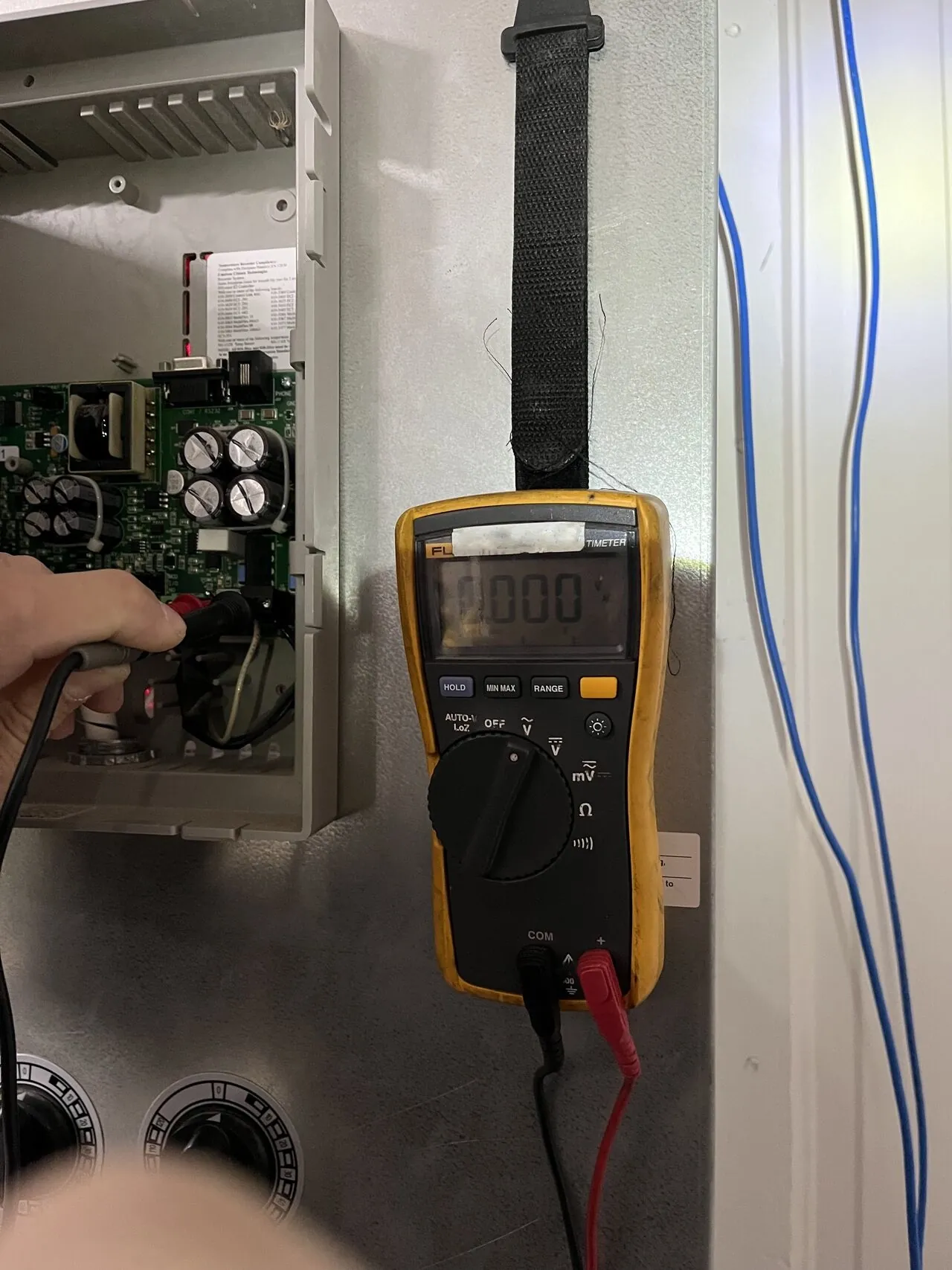
UPS Systems & Bypass
UPS installation, replacement, battery service, and maintenance bypass for Arizona data centers and mission-critical facilities.
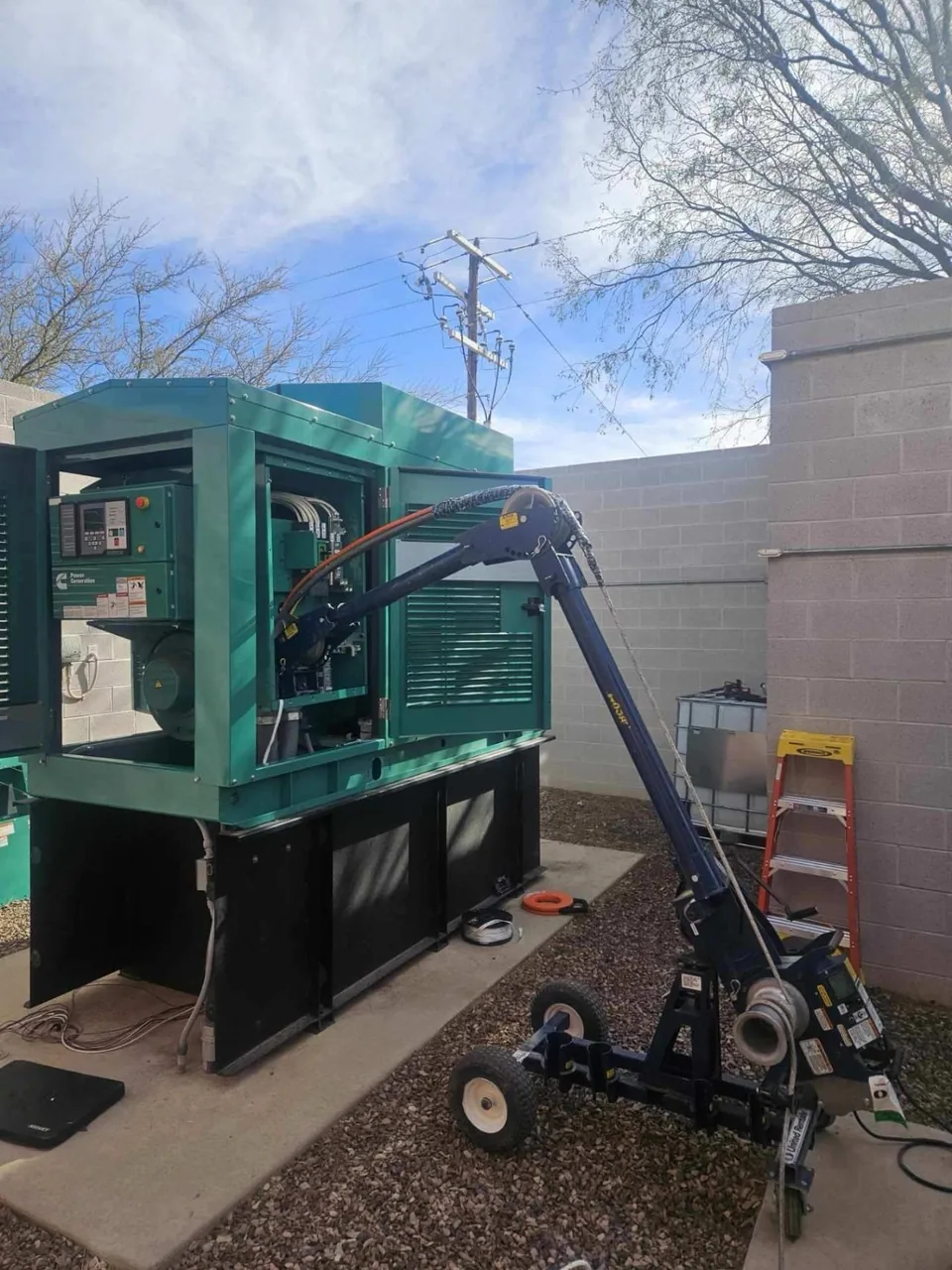
Generator Installation
Commercial standby generator installation, ATS integration, load bank testing, and preventive maintenance for Arizona critical facilities.
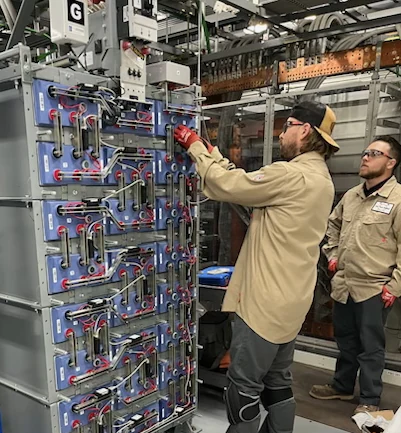
Battery Systems
Stationary battery string installation, capacity testing, and replacement for UPS, DC power plants, and critical power applications across Arizona.
Talk to a DC Power Specialist
DC plant assessment, battery string service, rectifier maintenance, or emergency response — anywhere in Arizona
24/7 Emergency Service
Round-the-clock response for DC power and critical power emergencies
Email Us
DC power plant assessments, project quotes, and maintenance contracts
Arizona Location
519 W. Lone Cactus Dr. Ste 103
Phoenix, AZ 85027
Serving all of Arizona